
Our goal and strategy
In a world of information abundance, Project ECHO aims to use AI to transform knowledge into wisdom through contextualized support.
In the global south, AI can help further enhance access to best practice knowledge by reducing barriers to entry (e.g., language, tech literacy). This has the potential to supercharge ECHO's work across India, Indonesia, Vietnam and Malaysia.
A combination of peer-to-peer mentorship and AI-enabled access to trusted, actionable, expert curated knowledge in the participants' native language can transform learning outcomes at scale
As AI systems further permeate the healthcare delivery landscape, providers will also need further guidance and mentorship on the safe and effective use of these systems, where ECHO can also be a valuable model to drive adoption of these new interventions.
We are actively piloting and leveraging AI technology into the ECHO model and the iECHO platform, with a key focus on preserving the human to human connection that is core to ECHO, grounded in our Responsible AI Governance Principles.
Our implementation of AI is broadly in 3 categories:
- Integration of AI technology into the ECHO model and iECHO to enhance the user experience for ECHO partners and participants
- Use of AI tools by ECHO staff to augment and automate workflows and improve efficiency (e.g., Coding, Testing, Automating research synthesis, data reporting etc.)
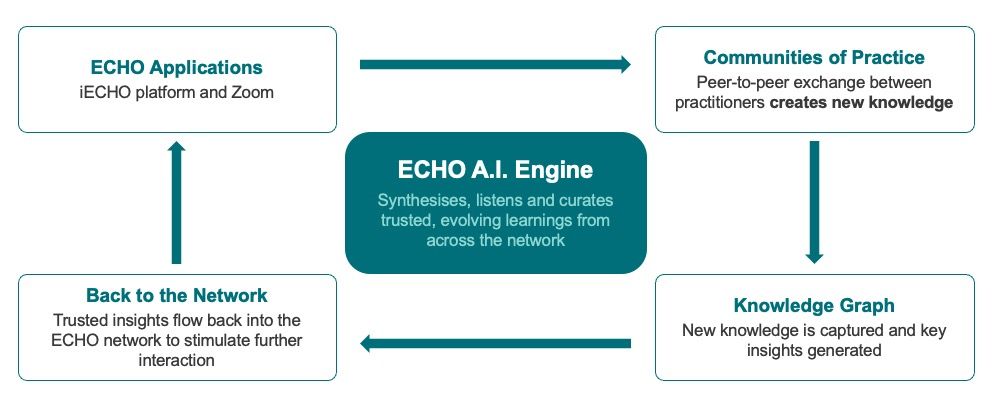
- AI as a "listening engine" across the ECHO community that synthesizes learnings and trends from across the global network
How AI is being integrated into the ECHO model and iECHO platform
We are actively piloting and developing A.I. interventions in the following areas:
- Session Assistant: Summarizing learnings from ECHO sessions into clear takeaways - that can be shared and queried by participants in case they missed the session, or want to refer back later on — available in the native language, and in text and voice.
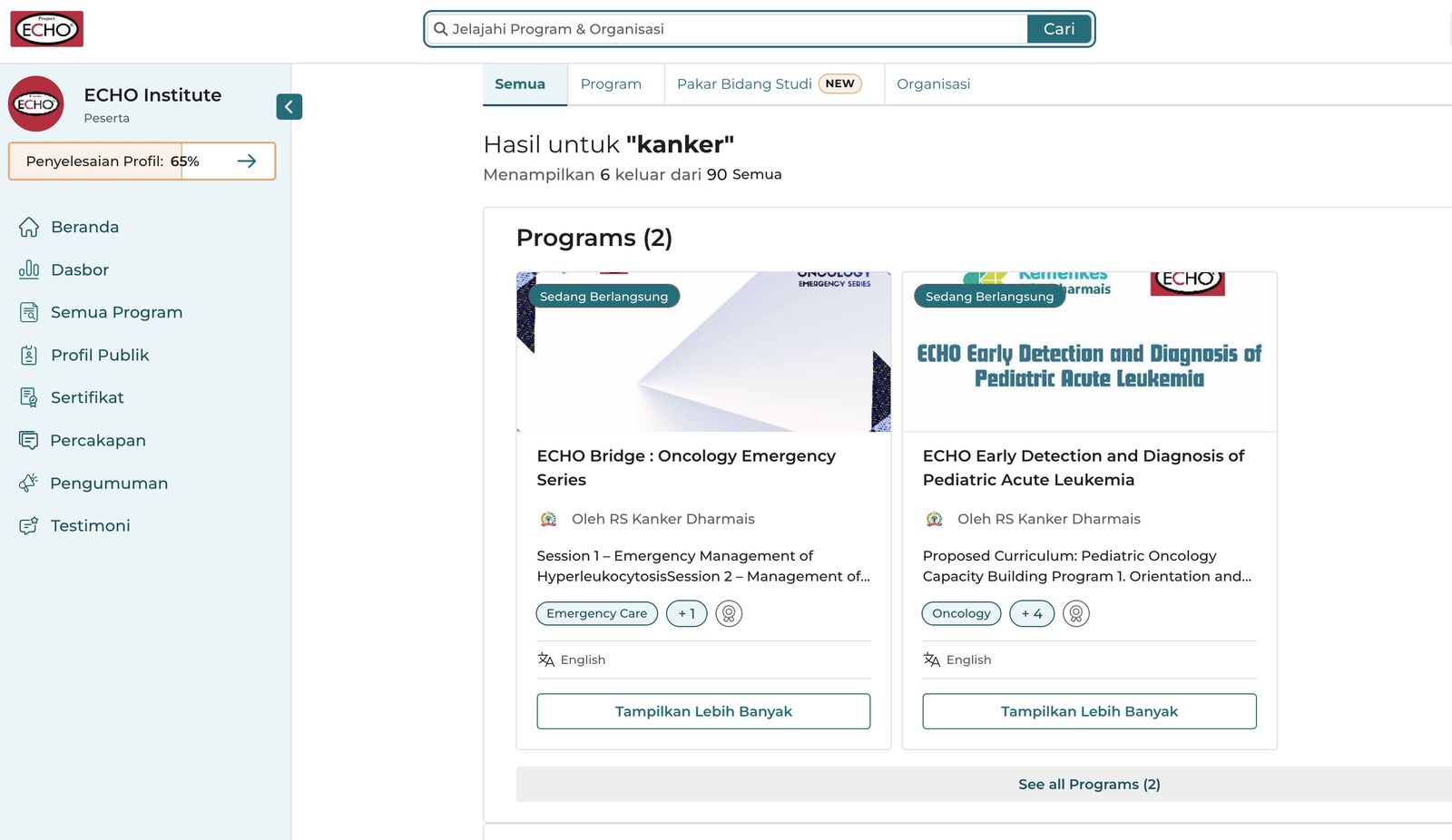
- Learning Advisor: to connect participants with suitable ECHO programs that align with their goals / focus area / profession and guide participants in their learning journey
- Analyst Agent: Analyzing data, enabling M&E and generating insights for hub teams - as well as making it easier to query for reporting metrics, insights etc - instead of having to do complex analysis in Excel. A secure and data-privacy-compliant AI agent is being developed that will be able to summarize de-identified data and generate trends and insights for partners and program teams.
- Simulation / AI generated cases: that can supplement (not replace) participant-driven cases (we want to be careful not to use AI to reduce peer to peer interaction)
- Knowledge Engine: Analyzing insights and learnings from across the ECHO network to understand real time health trends / insights
Potential impact of ECHO + AI:
For frontline health workers:
With an AI enabled ECHO model and iECHO platform, participants will soon be able to:
- Get key takeaways and summaries in their native language after ECHO sessions (All major Indian languages, Bahasa, Malay, and Vietnamese are supported)
- Practice with expert-curated simulation based cases in addition to the real patient case discussions during sessions
- Get recommendations for relevant publicly available programs in their region and language that they can register for
- Connect with subject matter experts from their field, even outside their ECHO program
For ECHO hubs and governments:
- AI agents will be able to automate manual workflows, generate summaries, insights, evaluation, and reporting, saving time and effort
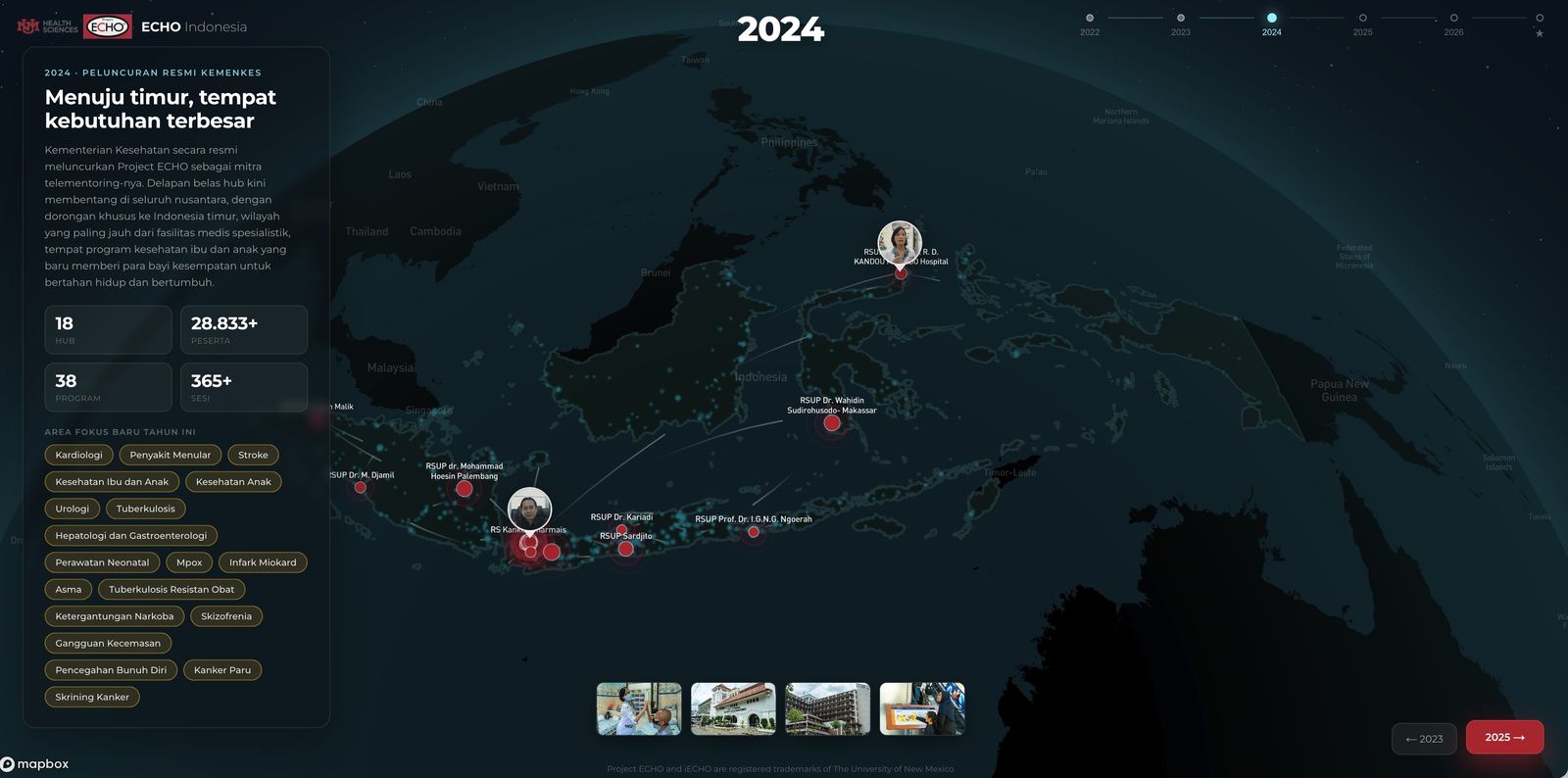
- Gather public health insights from across the global ECHO network, giving signals for curriculum design and health system strengthening
- Get actionable program related insights and tips through the iECHO support agent to improve the efficacy of their ECHO programs
Use of AI within iECHO to automate and improve efficiency
iECHO Program Banner image generation Live in production
Technologies used: Google Gemini, Nano Banana
When a new program is created on iECHO, iECHO uses A.I. to suggest a banner image that is generated keeping in mind the program's focus area and topics, to improve the look and feel, and engagement of the program pages
PHI & PII detection infrastructure Internal beta testing
Technologies used: Google Gemini
When content is uploaded on to iECHO, the internal PHI and PII detection algorithm will check if there is any accidental disclosure of patient details, and flag it to the user, improving iECHO's data privacy and security compliance.
iECHO Program name suggestion Live in production
Technologies used: Google Gemini
When a new program is created on iECHO, iECHO uses A.I. to suggest suitable program names that are aligned with Project ECHO's program naming convention, thereby improving the quality of program names, and ensuring participants can easily find and register for programs.
ECHO Research Synthesis Agent Internal testing
Technologies used: Google Gemini, Anthropic Claude
Multi-step reasoning and synthesis agent, trained on 900+ peer reviewed publications about the ECHO model, designed to be a useful internal tool for key stakeholders to synthesize research and apply it for fundraising and other strategic communication to demonstrate impact in different regions, and against various aspects (e.g., cost effectiveness, efficacy, patient outcomes, scalability, sustainability, etc.)
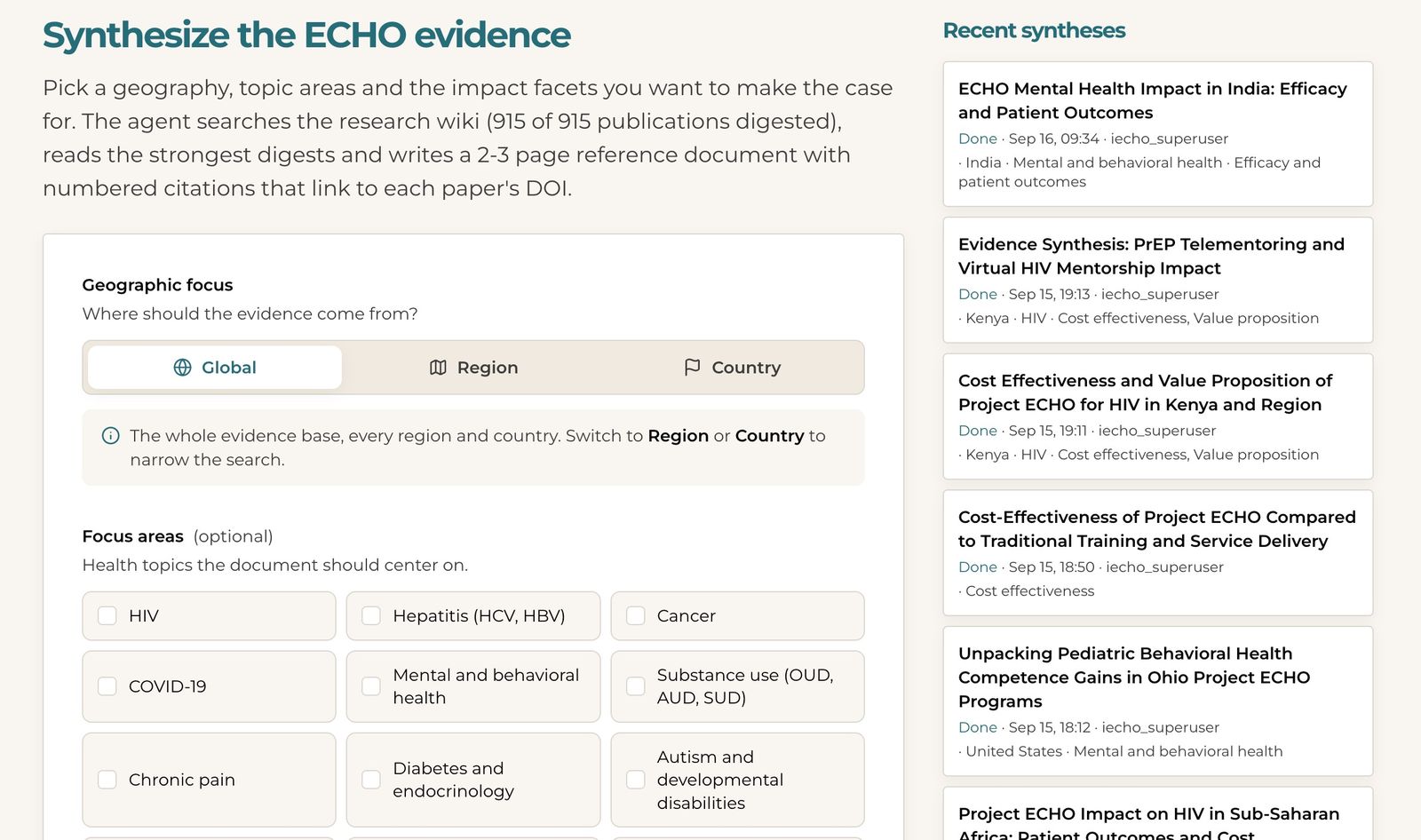
Impact: Research synthesis now possible within 60 seconds instead of multiple days of staff time, and helps identify gaps in ECHO's portfolio
iECHO Support Agent Internal testing
Technologies used: Google Gemini, Anthropic Claude
User support agent available in 25 languages that is trained on iECHO official documentation and best practices, designed to assist ECHO partners and participants in their queries and troubleshooting related to iECHO
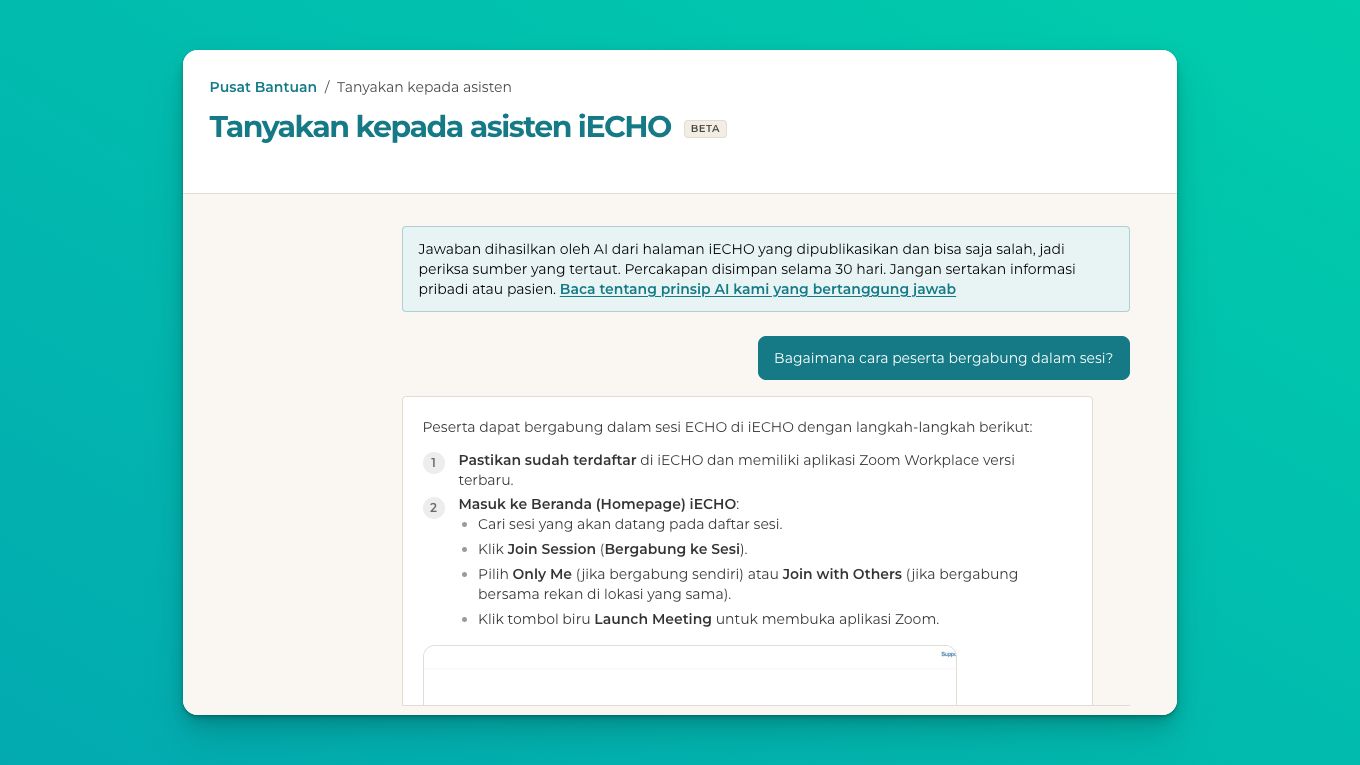
Internal tool usage at ECHO
We have actively begun using tools like Google Gemini, Claude Code, and Copilot to enhance operational workflows across teams. Below are a few use cases that we are currently piloting
| Software Engineering | Use of Claude Code for assisting developers with writing code, as per the solution design and technical architecture of the platform, ensuring high quality, performant code that does not create technical debt in the long term AI is being utilized in software development workflows for iECHO, as well as ancillary products like About iECHO, and iECHO Explorer |
| QA / Testing | Use of Claude Agents to automate tests for accessibility, security, and functionality of iECHO - enhancing our QA efforts, and improving our test coverage across different devices, browsers, languages etc. through automation |
| Security | Use of Claude for conducting penetration tests against the iECHO platform, identifying vulnerabilities, and helping patch them |
| Data Analytics | Use of AI to analyze data from iECHO to generate trends and summaries that can be shared with program teams |
| Translations | Use of Gemini-powered translations, with context of Project ECHO's glossary and knowledge base, ensuring high quality translations of the iECHO app and relevant documentation for end users in non-English speaking countries, e.g., Bahasa Indonesia for Indonesia, Hindi (and other Indic languages) for India |